
Importance of Communication in Veterinary Clinics & Pet Hospitals
In pet care, one wrong message can cost credibility. Learn why responsible communication is critical for veterinary clinics, hospitals, and animal health brands across India.
S. A Anthony
2/6/20268 min read
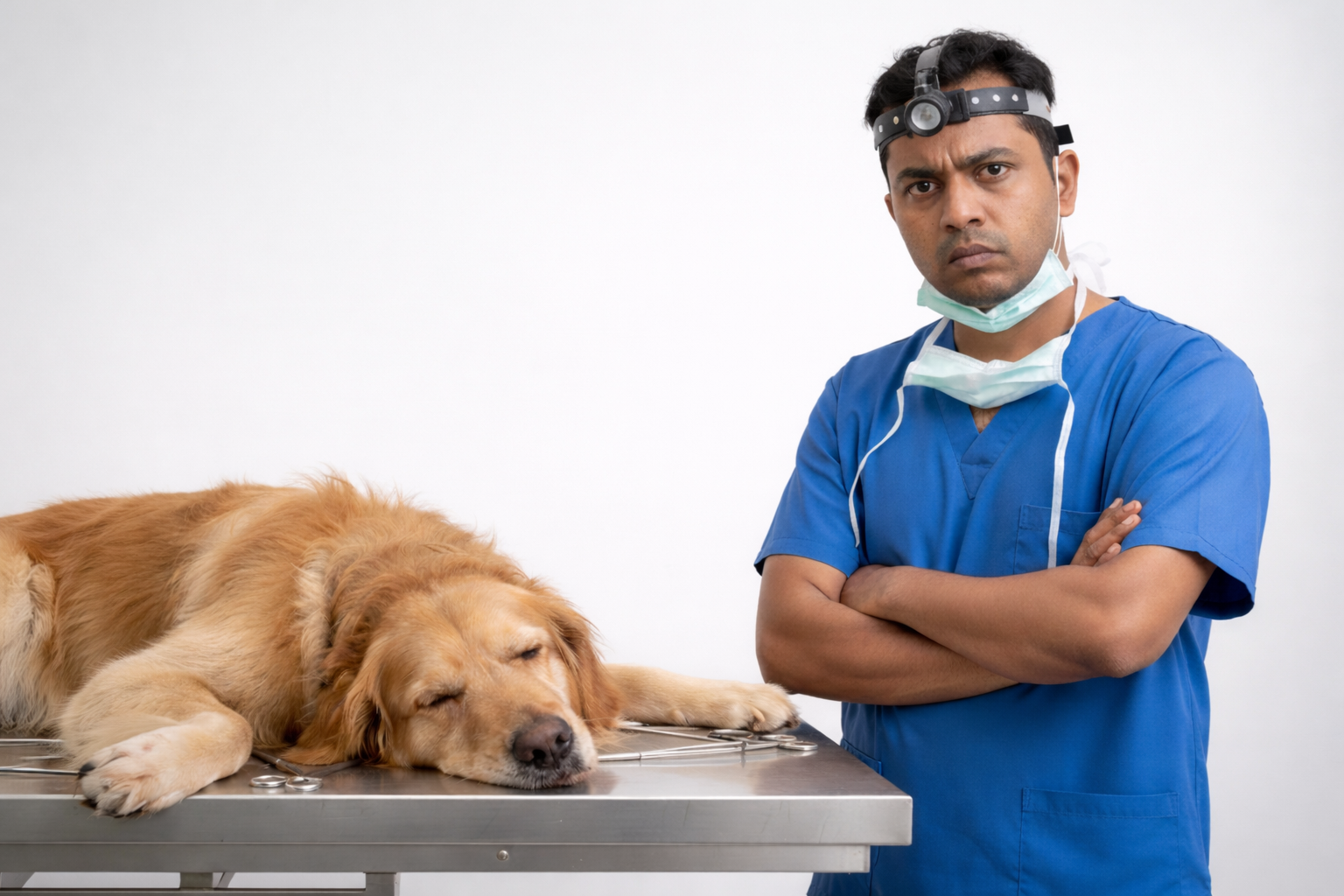
In pet care, communication is never neutral
In pet care, communication is never neutral. Every message either builds trust — or quietly erodes it. A case in point is this example.
I distinctly remember a viral reel from a veterinary clinic in Chennai. Two women were seen crying hysterically as the body of their beloved Labrador, Zack, lay on a stretcher. He had undergone what was meant to be a routine gastrointestinal surgery to remove a foreign object he had most probably swallowed — a procedure the veterinary team had performed countless times before.
During the surgery, unexpected complications arose, leading to an emergency situation. Despite the doctors’ best efforts, Zack could not be saved. Much later, reports revealed that he had a pre-existing genetic condition that neither his human family nor the veterinary team was aware of.
Given how sudden and unforeseen the outcome was, it was understandably difficult for the pet parents to accept. Emotions ran high. The staff handled the situation calmly, the pet parents eventually left, and at the time, it appeared that the incident had reached its end.
But that was only the beginning of the real crisis.
A video of the exchange — the viral reel — was later shared on social media. What followed was intense online backlash, not because of the clinical outcome, but because of how the situation was handled afterwards. The hospital’s report read more like a defensive response than a compassionate explanation and was shared merely as a cold email statement with the media.
The attending veterinarian being on planned leave was misinterpreted as avoidance. Public sentiment turned hostile, a police complaint followed, and the hospital’s reputation took a lasting hit. Even two years later, negative reviews tied to that single post continue to surface.
This wasn’t a medical failure.
It was a communication failure.
Why right communication in veterinary health and pet wellness is critical?
How the Indian veterinary landscape has changed?
Post-Independence, India’s veterinary system was primarily government-led and livestock-first, designed to support agriculture, dairy, and rural livelihoods. Over time, the country built a wide institutional network: as of 31 March 2024, India had 67,889 veterinary institutions — including 13,173 veterinary hospitals/polyclinics, 30,184 dispensaries, and 24,532 aid centres.
But a large share of this infrastructure still serves production animals. Companion animal care as a specialised, urban-facing category scaled much later — particularly from the late 1990s into the 2000s, alongside urbanisation and rising disposable incomes. India also has a large base of trained professionals: the Veterinary Council of India reported 81,938 registered veterinary practitioners as of 31 March 2023.
What changed post-2000s is not just clinical capability — it’s the consumer context. Multi-specialty pet hospitals, referral centres, advanced diagnostics, and organised clinic chains became more visible in major cities, highlighting how demand is rising faster than the system’s companion-facing capacity.
Pet parents have evolved faster than the industry
The pet wellness industry is still evolving — but the emotional maturity of pet parents has evolved faster. Pets are family now, not “just animals.” Reasons are visible everywhere: smaller households, delayed parenthood, nuclear living, stronger human–animal bonding, and constant exposure to global pet-parenting narratives through social media. This shift changes expectations: pet parents don’t only want treatment; they want to understand what is happening, what it will cost, what the risks are, and what outcomes are realistically possible.
Today, communication is not just about what services a clinic offers. It shapes how those services are understood, trusted, and remembered. When done right, communication helps clearly convey:
Programs and preventive care services
Medical specialisations and expertise
Emergency protocols and adverse outcomes
Long-term goodwill, leading to repeat visits and referrals
Unfortunately, many clinics struggle with this. When communication falters, it directly impacts goodwill — which is crucial for sustainable growth in this industry.


The hidden revenue impact of poor communication
Veterinary clinics rarely lose revenue dramatically. They lose it silently.
Pet parents may not argue or escalate. They simply do not return. Missed follow-ups, reduced compliance, and loss of referrals often stem from communication gaps — not clinical outcomes. Even when care is competent, confusion around instructions, costs, wait times, and prognosis can leave pet parents dissatisfied.
And digital amplifies this silently. Ongoing negative reviews linked to a single incident continue to influence new pet parents discovering a hospital online — long after the clinical team has moved on. That quiet erosion translates directly into lost revenue over time.


Where clinics commonly get communication wrong?
Across India, the same patterns repeat across clinics and hospitals:
Casual replies to serious health concerns
Overly technical explanations without context
Defensive or dismissive responses to reviews
Inconsistent tone across WhatsApp, social media, reception, and doctors
Silence during crises, followed by rushed or legal-sounding statements
Each response may seem thoda insignificant on its own. Together, they shape perception.
What “right communication” actually looks like in pet wellness
Right communication in veterinary and pet health care is not about polished marketing language. It is about being accurate, empathetic, and consistent — across situations.
1) Communication around services and programs
Most clinics offer services that are easy to provide — but hard to explain clearly. This is where trust is built or lost.
Preventive care: vaccination schedules, deworming, tick/flea control, senior wellness checks.
Examples of what “right” messaging includes: a series of social media short (Instagram -WhatsApp) content on the programs and what’s included, frequency, expected outcomes, and what it does not guarantee.
Diagnostics: blood work, X-rays, ultrasound, stool tests, allergy panels.
Right messaging: Written short content E-Brochures to engage with people You could use humor in the copy to make an otherwise serious read more engaging.- (WhatsApp) explain what a test can confirm vs what it can only “suggest,” and what the next steps might be depending on results.
Chronic care programs: kidney disease management, dermatitis plans, obesity management, arthritis support, long-term GI diets.
Right messaging: Long format series of videos timelines, lifestyle changes, medication adherence, and realistic improvement windows.
Costs (often ignored, then escalates later):
Even a simple cost “range” reduces conflict. Right communication includes: estimated range, what can change the final bill (additional diagnostics, anaesthesia time, ICU monitoring), and what is optional vs required.


2) Communication around expertise and specialisation
Specialisations should be communicated responsibly — highlighting experience and capabilities without creating unrealistic expectations.
For example: “orthopaedics” or “critical care” should come with clarity on:
what cases are handled in-house,
when referral is recommended,
and what outcomes depend on early presentation vs disease severity.
Clear boundaries build credibility.
3) Emergency and crisis communication (protocol-led, not reactive)
This is where most clinics struggle, and where reputational damage is fastest.
Emergency communication must prioritise:
timely updates,
calm, non-alarming language,
clear explanation of risks and uncertainty,
acknowledgement of concern without overpromising.
Risk communication matters: complications are not always negligence — but they must be communicated like a professional healthcare system does: with transparency, consent language, and documented updates.
4) Clinic owner lens: the wait-time problem (and why it becomes a trust problem)
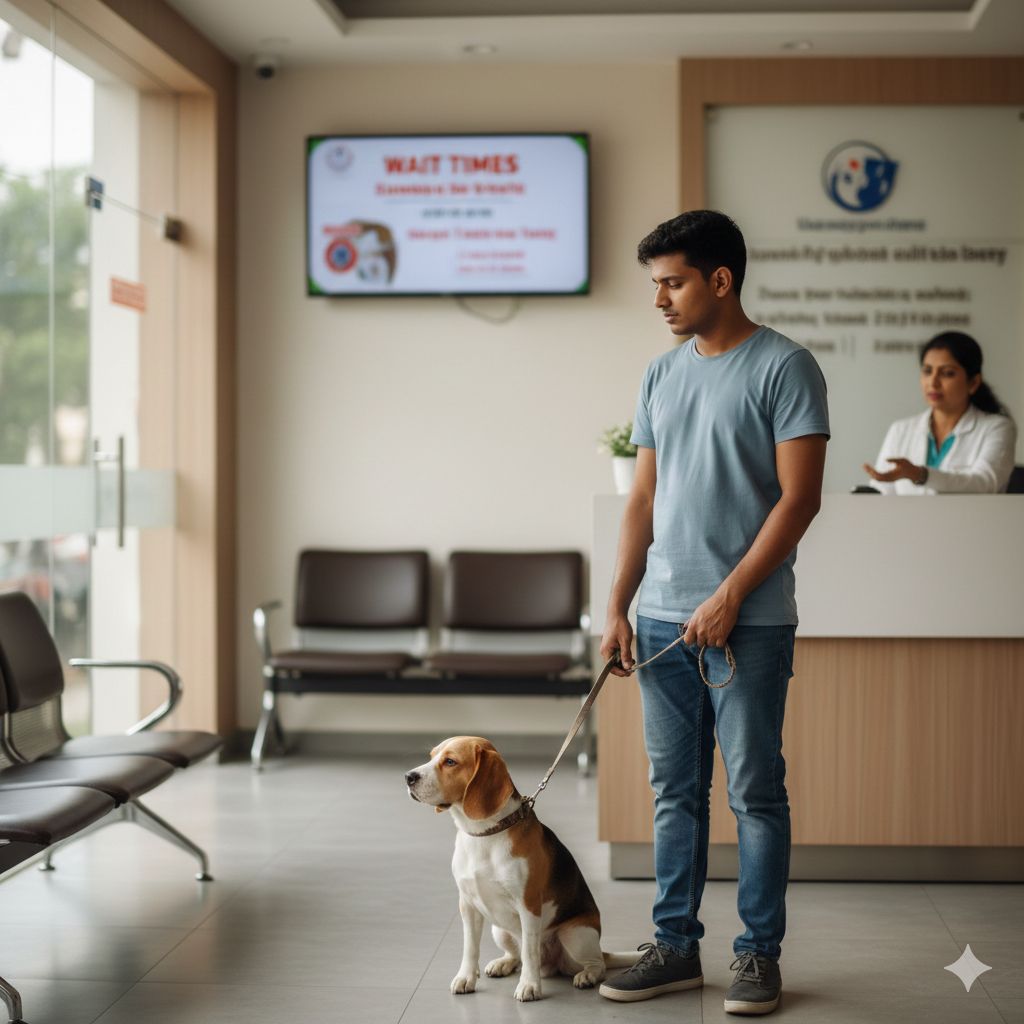
Most clinic owners don’t “create” long waits — staffing and case mix do. Emergencies interrupt OPD. A complicated surgery delays consults. A single critical case can absorb multiple staff members.
But pet parents interpret silence as neglect.
Right communication is operational:
a reception script for triage and wait times,
visible updates (“Emergency case ongoing; expected delay 40–60 minutes”),
a WhatsApp update template for waiting owners,
a clear escalation path when frustration rises.
This simple habit prevents scenes at reception, angry Google reviews, and staff burnout — without changing clinical quality.
5) Digital communication: using online touchpoints to convey clarity
Reviews, comments, DMs, and WhatsApp are not side channels anymore — they are extensions of the clinic.
Digital media can reduce pressure on staff if it is used to pre-communicate:
pinned posts/Highlights: “What to bring for OPD,” “Surgery process,” “Post-op care,” “Emergency triage rules”
FAQs that explain common conditions in simple language (GI foreign body, skin allergies, parvo care, CKD management)
clear “what affects the cost” explainer
pre-consult forms that capture symptoms and urgency
Google Business Profile updates (hours, emergency availability, response time expectations)
When digital is used like patient education — not just marketing — it reduces conflict and improves compliance.
Responsible communication as brand protection
In pet care, communication is never neutral. Every message either builds trust — or quietly erodes it. A case in point is this example.
I distinctly remember a viral reel from a veterinary clinic in Chennai. Two women were seen crying hysterically as the body of their beloved Labrador, Zack, lay on a stretcher.
He had undergone what was meant to be a routine gastrointestinal surgery to remove a foreign object he had most probably swallowed — a procedure the veterinary team had performed countless times before.
During the surgery, unexpected complications arose, leading to an emergency situation. Despite the doctors’ best efforts, Zack could not be saved.
Much later, reports revealed that he had a pre-existing genetic condition that neither his human family nor the veterinary team was aware of.
Given how sudden and unforeseen the outcome was, it was understandably difficult for the pet parents to accept. Emotions ran high.
The staff handled the situation calmly, the pet parents eventually left, and at the time, it appeared that the incident had reached its end.
But that was only the beginning of the real crisis.
A video of the exchange — the viral reel — was later shared on social media. What followed was intense online backlash, not because of the clinical outcome, but because of how the situation was handled afterwards.
The hospital’s report read more like a defensive response than a compassionate explanation and was shared merely as a cold email statement with the media.
The attending veterinarian being on planned leave was misinterpreted as avoidance.
Public sentiment turned hostile, a police complaint followed, and the hospital’s reputation took a lasting hit. Even two years later, negative reviews tied to that single post continue to surface.
This wasn’t a medical failure.
It was a communication failure.
Why structured communication and professional support matters?
Veterinary hospitals, diagnostic centres, and clinics benefit most when communication is structured rather than reactive.
Clear protocols for:
emergency responses,
online reviews,
social media escalations,
sensitive post-incident communication,
cost + consent communication
reduce risk and protect goodwill.
This is where a professional agency with a defined communication framework and digital reaction program helps — not to “spin” narratives, but to ensure:
timely, aligned responses,
consistent tone across platforms,
emotionally intelligent messaging,
reduced burden on medical teams during crises.
When communication is planned, even difficult situations don’t spiral. Right communication doesn’t eliminate risk — but it ensures that when things go wrong (as they sometimes will), trust has a fighting chance to survive.


Email- info@baubaupetservices.com
© 2025. All rights reserved
Location
Indira Sahakar Nagar
No 3, Ground floor,
Nahur Road, Mulund West
Mumbai 400080
Hours
Monday to Saturday 10 AM - 6 PM
+91 93217 31654