
Why Indian Veterinarians Can No Longer Ignore Social Media
From Mumbai to Bengaluru, Indian pet parents are digital-first. Learn why social media and digital marketing are now essential for veterinary clinics and pet-care professionals in India.
S. A Anthony
1/9/20264 min read


When Reputation Was Enough — And Why It Isn’t Anymore
In the early 1990s, if you had a pet in the western suburbs of Mumbai, you knew Mrs Deshpande. She ran a modest veterinary clinic, charged pocket-friendly fees, and relied entirely on word-of-mouth.
Calm, experienced, and firm, she was trusted across neighbourhoods. She never advertised, never promoted herself, and never needed to. Her clinic was always busy, and alongside her practice, she also taught at a private veterinary college, training young veterinarians who respected her deeply. For years, this was how veterinary practices in India grew.
Then, quietly, everything changed.
By the early 2000s, younger veterinarians began opening smaller clinics nearby. They charged more, had fewer years of experience, and yet attracted more pet parents. The difference was not clinical skill—it was visibility.
When COVID-19 forced prolonged clinic closures, Mrs Deshpande had no digital presence to fall back on. Communication with clients stopped, routines broke, and pet parents moved on. The final realisation came when many long-time clients chose another veterinarian—one of her former students. Shortly after, she retired.
This is not a story about poor veterinary care. It is a reminder that in today’s India, clinical expertise alone is no longer enough.
The Indian Pet Parent Has Changed
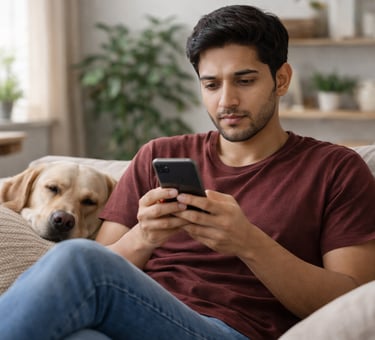
In cities like Bengaluru, where most pet parents are working professionals, clinic discovery now begins online. Symptoms are Googled, reels are watched, and recommendations are checked digitally—often long before an appointment is booked. Being absent online is no longer neutral. It actively reduces discoverability. In a digital-first ecosystem, visibility plays a direct role in trust-building. Unlike Mrs Deshpande’s time, today’s new-age veterinarians are aware of this shift.
As a result, digital marketing for veterinary clinics is no longer a promotional choice. It has become a practical necessity.
From Word-of-Mouth to Digital Trust
Traditional word-of-mouth still exists, but it has evolved.
In Delhi, for instance, pet parents increasingly rely on local pet-community WhatsApp groups and city-specific Instagram recommendations. A single well-explained, informative post on vaccination schedules or parasite control can reach hundreds of pet parents across neighbourhoods and significantly boost a veterinarian’s profile.
Social media now allows veterinarians to:
Achieve word-of-mouth at scale
Communicate consistently
Extend their presence beyond clinic walls



What Professional Social Media Should Look Like for Vets
Social media today is full of trend-based and entertainment-led content, including reels where veterinarians participate in viral formats to maximise reach. While an occasional light-hearted or humorous reel can work well, shifting entirely towards entertainment may dilute professional authority.
In reality, veterinarians benefit most from calm, educational communication—explaining case scenarios, discussing preventive care, and fact-checking common myths.
For example:
A veterinarian in Chennai explaining heat management for dogs in humid and non-humid climates.
A clinic in Hyderabad sharing demonstrative videos showing how dental disease progresses in cats and dogs with age.
This kind of content builds authority, not popularity. It positions the veterinarian as a reliable source of pet-care information rather than a marketer.
Social Media as an Extension of Preventive Care
In Mumbai, many clinics observe that digitally informed pet parents arrive with better questions and clearer expectations. They are more open to preventive care and more compliant with treatment plans.
When veterinarians use social media consistently for education, it improves:
Early symptom recognition
Consultation quality
Long-term health outcomes
Pet parents today also expect shorter waiting times, timely advice, and proactive preventive care. Simple, cost-effective apps and CRM tools allow veterinarians to maintain digital health records, track medical history, and share updates with pet parents easily. This improves time management, enhances productivity, and enables quicker intervention when required.
In this way, social media and digital tools function as an extension of preventive healthcare rather than a distraction from clinical practice.
Today’s veterinary clinics rely on more than just stethoscopes, registers, and appointment books. Alongside traditional tools, several cost-effective digital solutions now support better time management, communication, and preventive care. Tools Supporting Clinic Efficiency include:
Local discovery platforms
(Google Business Profile, Maps, local listings)
Help clinics appear where pet parents search first.
Clinic CRMs and appointment tools
Enable digital health records, vaccination histories, reminders, and follow-ups.
Communication tools
Allow timely sharing of reports, updates, and preventive care advice.
When used together, these tools reduce waiting times, improve productivity, and help clinics focus more on care than coordination. Digital systems and professional social media now work together to support modern veterinary practice.


Digital Tools That Support Modern Veterinary Practice
Practical Steps for Indian Veterinarians to Build a Digital Presence
1. Establish a Clear Professional Identity
Clinics in cities like Ahmedabad and Jaipur benefit from doctor-led or clinic-led profiles that clearly communicate expertise, services, and values.
2. Prioritise Education Over Promotion
Pet parents across Kochi and Trivandrum respond strongly to simple, informative content that answers everyday pet-care questions without sales pressure.
3. Choose Consistency Over Frequency
Daily posting is not required. What matters is a structured, sustainable approach that fits around clinical schedules. This is where professional digital marketing support for veterinary clinics adds real value.
The Reality Facing Veterinary Practices Across India
Mrs Deshpande’s story is being repeated quietly in different forms across Indian cities. Veterinarians are not losing relevance because of declining skill, but because the way trust is built has changed.
Today, trust is formed online, reinforced through education, and strengthened through consistent communication. Social media is no longer optional for veterinary practices in India—it is part of how modern pet care functions.
Email- info@baubaupetservices.com
© 2025. All rights reserved
Location
Indira Sahakar Nagar
No 3, Ground floor,
Nahur Road, Mulund West
Mumbai 400080
Hours
Monday to Saturday 10 AM - 6 PM
+91 93217 31654